

Why Concrete Slump and Temperature Matter Before a Pour
A concrete truck arrives, but the mix feels stiffer than expected or the temperature is higher than anticipated. These conditions can affect placement and scheduling, especially during Louisiana’s warmer months. Knowing what to check helps contractors address concerns before concrete is discharged.
Concrete slump and temperature are important indicators of fresh-concrete conditions. They help contractors evaluate consistency and placement requirements, but neither measurement alone proves concrete strength or compliance. Sorrento Lumber & Concrete supplies ready-mix concrete and monitors key load information during delivery.
Ready-Mix Concrete Planning
Have Slump or Temperature Requirements for Your Pour?
Prepare your approved concrete specifications, estimated yardage, and jobsite details before requesting a quote. Clear requirements help the dispatch team discuss the mix and delivery needs for your project.
Request a Concrete Mix QuoteWhat Is Concrete Slump?
Concrete slump measures the consistency of freshly mixed concrete.
A standard slump test measures how much concrete settles after a testing cone is removed. Results are generally recorded in inches.
Slump can help identify changes in consistency, but it does not independently determine compressive strength or overall workability.
Different mixtures may achieve suitable consistency through their proportions and admixtures rather than simply containing more water.
The ASTM C143/C143M slump testing standard describes the testing method and cautions against directly relating field slump results to concrete strength.
What Affects Concrete Slump?
Several factors can influence slump:
- Mixture proportions and aggregate characteristics
- Concrete temperature
- Time during transportation
- Water content and approved admixtures
- Mixing conditions
Contractors should compare the results with the project’s approved concrete specifications rather than assuming one slump target works for every job.
What Does Concrete Temperature Tell Contractors?
Concrete temperature measures how warm or cool freshly mixed concrete is.
Temperature affects setting behavior, placement conditions, and the rate at which concrete develops strength.
Higher temperatures can contribute to faster slump loss and shorter working times. Cooler temperatures may slow setting and strength development.
For Louisiana contractors, warm weather makes delivery coordination particularly important.
The American Concrete Institute’s hot-weather guidance explains concrete temperature considerations and applicable specification requirements.
However, the acceptable temperature depends on the project, mixture, governing specifications, and placement conditions.
A temperature reading does not independently establish whether the concrete meets every project requirement.
Concrete Slump vs. Temperature: What’s the Difference?
Both measurements help contractors understand fresh concrete, but they serve different purposes.
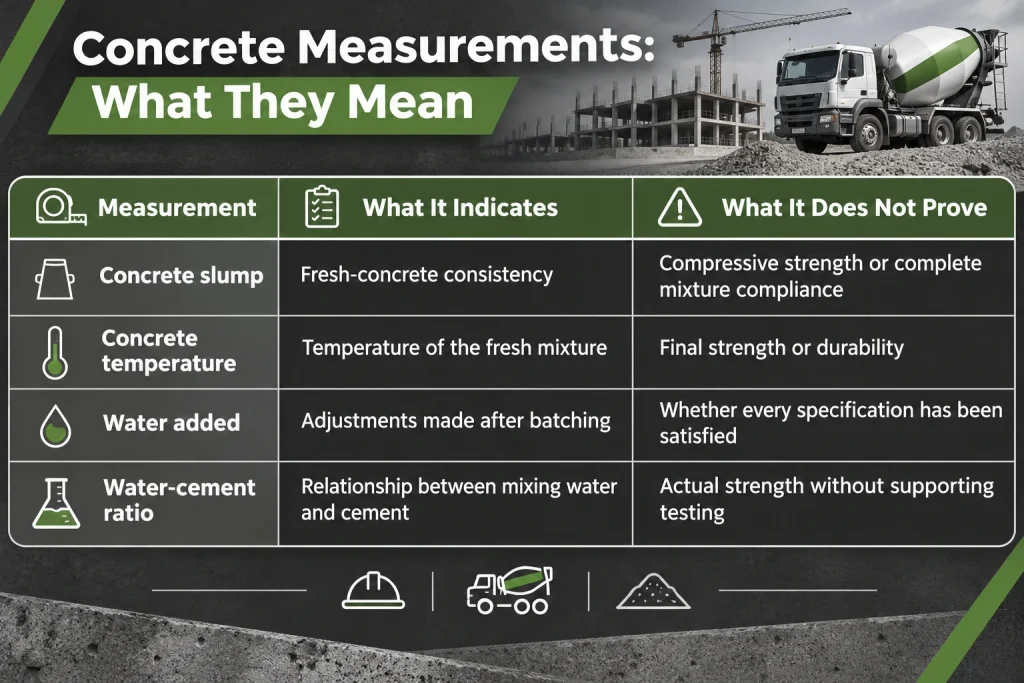
For mixtures containing supplementary cementitious materials, project specifications may use the water-to-cementitious-materials ratio instead.
The approved mix design and qualified testing remain essential.
How Delivery Conditions Affect Fresh Concrete
Concrete characteristics can change between batching and placement.
Transportation time, weather, mixing conditions, and material properties may influence consistency and temperature.
For example, a mixture may lose slump during transportation without additional water being removed.
The NRMCA Technology in Practice resources include guidance on slump loss and managing fresh-concrete temperature.
Before scheduling concrete delivery, contractors should confirm:
- Required mix specifications
- Requested delivery schedule
- Placement method and pump requirements
- Jobsite access
- Crew and equipment readiness
Good coordination helps identify potential delivery and placement issues before the truck arrives.
Concrete Delivery Coordination
Planning a Pour With Specific Mix Requirements?
A specified slump or temperature limit can affect delivery planning. Share your approved mix requirements, estimated cubic yards, placement method, jobsite access, and requested pour date so dispatch can discuss the order details.
Discuss My Concrete Delivery RequirementsCan Water Be Added to Concrete at the Jobsite?
Water additions require careful control.
Adding water may increase slump, but excessive or unauthorized additions can change the water-cement ratio and affect concrete performance.
Water adjustments should follow the approved mixture limits, project specifications, supplier procedures, and applicable standards.
The National Ready Mixed Concrete Association explains that permitted jobsite water additions must remain within mixture requirements and should be properly documented.
Contractors should not independently change concrete mixtures without appropriate authorization.
When placement consistency becomes a concern, coordinate with the supplier and responsible project personnel before making adjustments.
How Sorrento Monitors Concrete Slump and Temperature
Sorrento Lumber & Concrete uses Command Alkon’s COMMANDassurance technology to report fresh-concrete conditions during transportation.
According to the company’s concrete technology page, its system provides information about:
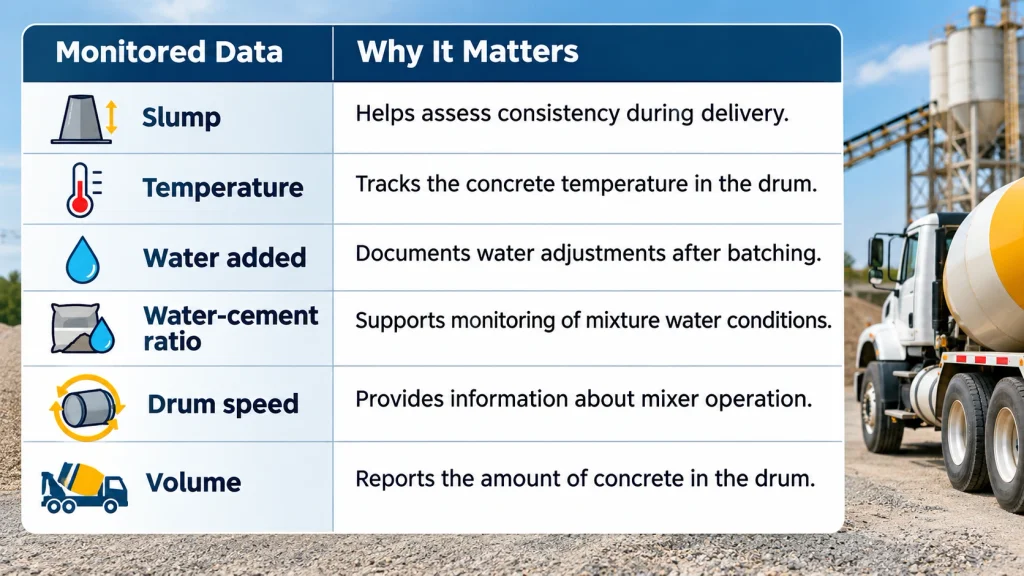
This information helps the quality control and dispatch teams evaluate changing load conditions.
GPS tracking also helps dispatch communicate truck location and estimated arrival information.
However, digital monitoring does not replace required field sampling, independent testing, or project acceptance procedures.
Monitoring provides additional information, not a guarantee of concrete strength or compliance.
Why Field Testing Still Matters
Contractors should distinguish between delivery monitoring and project-required acceptance testing.
Depending on project specifications, qualified testing personnel may evaluate:
- Fresh-concrete slump
- Concrete temperature
- Air content
- Density
- Compressive-strength specimens
The NRMCA’s concrete materials testing guidance discusses representative sampling, appropriate test procedures, and strength-specimen requirements.
Testing should follow applicable ASTM standards and project documents.
For engineered construction, the approved plans and specifications determine the required testing and acceptance criteria.
Managing Concrete Conditions During Delivery
A commercial contractor in the Baton Rouge area is preparing for a foundation pour during warm weather.
The project requires a specified concrete mixture, and the crew has arranged pumping equipment.
Before placement, the contractor confirms the approved mix requirements, delivery sequence, and required field testing.
If the delivered concrete’s consistency or temperature raises concerns, the contractor coordinates with quality control personnel before proceeding.
This approach helps identify whether adjustments or additional evaluation are appropriate without relying on assumptions about the mixture.
Concrete Delivery Checklist for Contractors
Before requesting ready-mix concrete, verify the following:
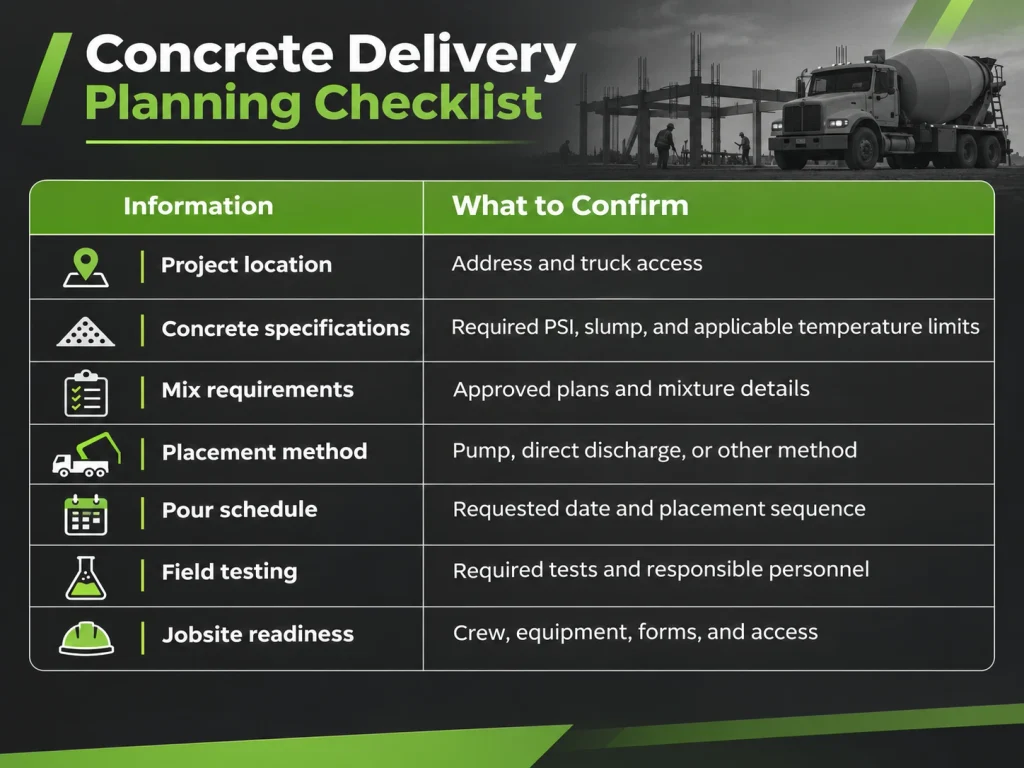
For projects requiring multiple loads, communicate the planned placement sequence so dispatch can review the delivery requirements.
Contractors should also consider Louisiana weather conditions and prepare appropriate placement and curing procedures.
Frequently Asked Questions
1. What is the difference between concrete slump and temperature?
Concrete slump indicates fresh-concrete consistency, while temperature measures how warm or cool the mixture is. Both provide useful information about placement conditions but do not independently prove concrete strength.
2. Does higher concrete slump mean weaker concrete?
Not necessarily. Slump can change because of admixtures, aggregate characteristics, temperature, or water content. Adding excessive water can affect strength, but slump alone cannot determine concrete performance.
3. What is the ideal concrete temperature for pouring?
There is no single temperature appropriate for every project. Acceptable conditions depend on the concrete mixture, project specifications, weather, and applicable standards.
4. What should contractors provide when ordering ready-mix concrete?
Provide the jobsite location, estimated cubic yards, required PSI, applicable mix specifications, placement method, and requested pour schedule. Identify any special testing or temperature requirements.
Ready for Your Next Concrete Pour?
Get Your Concrete Requirements Ready for Dispatch
Planning a slab, foundation, or other concrete project? Have your jobsite location, estimated yardage, required PSI, mix specifications, placement method, and preferred date ready. Select Concrete on the quote form or call dispatch to discuss your requirements.
Sorrento Ready-Mix Concrete
Find Our Sorrento Concrete Plant
Planning a concrete pour in Louisiana? Sorrento Lumber & Concrete supplies ready-mix concrete through its network of concrete plants. Contact dispatch with your project location and mix requirements to discuss delivery.
Sorrento Ready-Mix Concrete Plant
9563 Airline Highway
Sorrento, LA 70778
Concrete Dispatch: (225) 929-5060
Hours: Monday-Friday, 7 AM-5 PM
Looking for a concrete plant closer to your project? View All Sorrento Concrete Locations . Concrete orders are coordinated through dispatch.